Alright, here's the thing, I'm currently four movies behind. I have a little of an OCD thing going on where I hate to write about movies out of order. And, now that I'm on Christmas break, I'll be seeing even more movies and I'll likely fall further behind.
Something needs to be done about this.
As luck would have it, I don't have particularly strong feelings or deep thoughts about any of the four movies currently in the queue. So, even though I hate writing quick-hitter reviews, I'm willing to do so in the name of catching up.
None of this means anything to you, dear reader, I'm aware. But, putting this explanation out there makes me feel a little better about shirking my blogging duties. So...here we go.
The Hunger Games: Catching Fire ***
Unless you're living under a rock somewhere, chances are you've already seen this movie. So, I don't feel the need to say a whole lot here.
If you liked the first Hunger Games movie, you'll like this one. It's competently made and well-acted. Unlike the rest of the planet, I never read the second book, so I didn't know what was going to happen. The movie kept me interested the entire time.
And, of course, with this movie, Jennifer Lawrence takes another step on the path toward world domination.
Out of the Furnace **1/2
I was interested in this movie from the moment I saw the first trailer. Sadly, it failed to live up to expectations. It's not a bad movie, just not as good as I'd hoped.
A tribute to the dying way of life in the Rust Belt, Out of the Furnace features an outstanding leading performance from Christian Bale, playing a Russell Baze, a steel-worker haunted by disturbing memories and a tough life. His brother, played by Casey Affleck, an Iraq war veteran, starts running with the wrong crowd and eventually finds himself in over his head. Russell takes it upon himself to try to save him.
Overall, the movie showcases some fine acting from it whole ensemble. Bale's performance is one of the best of his career, though it lacks a big scene to tie it all together. Affleck is also very good. Willem Dafoe and Sam Shepard also turn in noteworthy performances. And, of course, there's Woody Harrelson chewing up the scenery as the villain of the piece.
In the end, it's not the actors that are the problem, it's the script. The movie succeeds thematically and in terms of tone. It just never seems to go anywhere -- it's all premise, not enough story. Still, it's worth your time, particularly if you, like me, are a fan of the actors.
What sets this movie apart, however, is its effective use of the song "Release" by Pearl Jam. Why has that song never appeared on a soundtrack before?
Philomena ***
This is another movie that succeeds mostly on the strength of its lead performance. Judi Dench, in fine, Oscar-worthy form, plays Philomena Lee, a woman who lost her illegitimate son at the hands of some Catholic nuns. Fifty years later, she joins journalist Martin Sixsmith, played by Steve Coogan, on a journey to find her child.
It's a true story, by the way.
The interplay between Dench and Coogan is wonderful, shifting from hilarious to philosophical to theological, often in the same scene. And, the story pipes along at a good pace. If there's a fault in the movie, it's that it tries too hard to be whimsical when the subject matter is often very sad and serious.
Still, it's a fine film. Dench will deserve her certain Academy Award nomination.
Anchorman 2: The Legend Continues ***
A worthy sequel to one of the indispensable comedies of the last decade, Anchorman 2 succeeds in most of the same ways its predecessor did. In the end, you could probably just say that they've made the same all over again -- and that's not a bad thing.
The original struck a chord with me that few comedies about idiots ever have. Though, I have to say that, while I rarely go a day without uttering a quote from the original, I don't know that I'll be saying the same thing about this one.
This movie's one weakness: Too much Steve Carell. While Brick was pretty much just a funny set piece in the original, he gets his own subplot in this one. And, every time it shifts to that story, the movie goes from stupid-funny to just stupid-stupid.
But, honestly, I'm nitpicking. Overall, this movie is hysterical. The climactic battle sequence, which mirrors a similar scene from the first movie, may be the funniest thing I've seen all year.
I've written about Alexander Payne -- one of the finest directors working today -- on this blog before. A couple years back, I wrote a review of his last film The Descendants where I said this:
His movies tend to circulate around less-than-heroic figures, below-average Joes whose troubles are common and familiar and, more often than not, self-inflicted. Most of his protagonists tend to be middle-aged-men -- or, in the case of About Schmidt, an older-than-middle-aged man -- who are coming to terms with the disappointing lives they've created for themselves. While this is hardly a unique approach for modern cinematic storytelling, Payne's sincere affection for each of the schlubs he's created, even when they don't deserve it, is always refreshing. It's easy to create a loser just to make fun of him. But, that's not how Payne works.
I reread that as I sat down to write this review and my first thoughts were: 1) I think I'm a better writer than I was back then, and 2) Nebraska is, in many ways, par for the course with Alexander Payne.
The movie tells the story of Woody Grant (played by the magnificent Bruce Dern), an old codger who receives a Publisher's Clearinghouse letter in the mail telling him he's won a million dollars and believes it. This sets him off on a quixotic quest from Billings, Montana to Lincoln, Nebraska in order to claim his prize.
At first, he tries to walk there, though he doesn't get very far thanks to the police. So, he has to enlist the help of his son David (played by the surprisingly subtle Will Forte). David knows it's a scam and suspects his father is suffering from dementia. But he also recognizes that his dad has little else to live for and, in many respects, neither does he.
On their way to Lincoln, they stop off in Woody's hometown to see his relatives and some of his old friends. David gets an opportunity to learn about his father's past, which allows him to finally connect with the old man in ways that were never possible in their icy dynamic. Most of these old acquaintances are quick to believe Woody's story, and some of them want in on the action. Indeed, at times it seems that only David, his brother Ross (played by Bob Odenkirk), and his mother (played by June Squibb) know what's going on.
Ultimately, Nebraska is both a tribute to small-town America and sort of a comic indictment of some of the people who live there. It's also a case-study in the friction that so often belies father-son relationships. It's shot in beautiful black and white, reflecting both the supposed simplicity of the life and values it portrays and the emptiness of the lives of its main characters.
I'm not going to pretend that I know much about Bruce Dern, though I've read a lot about him in relation to this movie. He's spent a lifetime in supporting roles, usually hamming it up -- as supporting actors often do -- in order to stand out. But, here he's all cloudy eyes and mumbles, portraying a man broken down by years of hard life and hard living. It's a slow-burn performance that pays off big time. He's likely destined for an Oscar nomination.
The supporting cast are all first-rate. Like I said, Forte shows all new levels of depth that you just wouldn't suspect after his years on SNL. And, June Squibb is simply outstanding. She steals every scene that she's in.
All told, Nebraska is a worthy entry into the canon of Alexander Payne. It is, in my opinion, one of the best movies of the year.
I could be wrong, but I assume that those who read these reviews focus primarily on the star-ratings I give to individual movies and don't pay attention to much else. I know that's how I often read movie reviews. And, in general, I figure everyone is like me.
That's unfortunate, particularly with a movie like Dallas Buyers Club. There are parts of this movie -- particularly the performances -- that are off-the-charts incredible. There are other parts the movie that are just mediocre. I highly recommend this movie so that people can get a gander at its more praiseworthy elements. But, ultimately, taken as the sum of its parts, I can't give this movie a stellar overall rating.
Someday, I'm going to write a whole blog post explaining my star-rating system. Until then, just know that three stars basically means the movie is good but far from great.
That's my overall assessment of Dallas Buyers Club. But, while it's only a three star movie, it contains a couple of four-star performances.
One of those is from leading man Matthew McConaughey, who plays Ron Woodroof, a bull-riding homophobe who was diagnosed with HIV in 1985 and given 30 days to live. Determined to live, he bribes a hospital janitor into stealing bottles of AZT, the only drug available at the time to treat HIV and AIDS. When the scheme is uncovered, he heads to Mexico, where an unlicensed American doctor starts treating him with a series of vitamins and proteins that have not been approved by the FDA. This unapproved treatment is aimed at the symptoms of HIV instead of trying to eradicate the virus.
Ron begins to feel better and immediately sees a business opportunity. He decides to smuggle these substances into the U.S. in order to sell them to American AIDS patients. To temporarily skirt the law, he sets up a "buyers club," wherein his customers pay a monthly membership fee and he "gives" them the drugs. This scheme is a success as it both extends Ron's life and makes him a ton of money.
The success of the endeavor is due in large part to Rayon, a transgendered woman played by Jared Leto in the film's other incredible performance. She is Ron's secret weapon, giving him credence in Dallas's gay community that the bigoted rodeo fanatic couldn't attain on his own.
Like I said, both of these actors are beyond exceptional in these roles, destined for award nominations, both with legitimate shots at taking home a statue on Oscar Night.
McConaughey is in the middle of a highly-touted career transformation and Dallas Buyers Club is the capstone. He is ferocious and awe-inspiring in this movie. The performance is more than a physical transformation (though he did lose some 40 pounds for the part). He inhabits every inch of this character and plays it with both flash and nuance. It is truly a sight to behold.
Much the same could be said of Leto's performance, which is both heartbreaking and revelatory. He plays Rayon with an uncanny grace and fearlessness that you just wouldn't expect from someone best known as the lead singer of a really crappy rock band (FN1).
So, you might be asking, what's wrong with the movie. Well, I'll tell you.
First of all, so much of the story hinges on the relationship between Ron and Rayon and, in the end, it all feels a little too forced. Speaking of forced relationships, there's a doctor played by Jennifer Garner who eventually and without any real explanation becomes the biggest supporter of Ron and Rayon's cause. On top of that, there are the villains of the whole thing -- the FDA and drug companies -- that are depicted with about as much nuance as Boris and Natasha from Rocky and Bullwinkle (FN2). Much of the story the movie is trying to tell just doesn't feel true in the end, which is a problem for a movie that is supposed to be based on true events.
But, none of that should take away from McConaughey and Leto's brilliant work in the movie. And, if you, like me, enjoy watching actors go for broke, I highly recommend this movie, even if it stumbles a little on its own intentions in the end.
FN1 -- Someone had to say it. FN2 -- Nothing but the timeliest of references on this blog.
One man, adrift for eight days on the Indian Ocean.
In a nutshell, that's what director J.C. Chandor's brilliant new film All is Lost is about. Sure, there are details, but, to be honest, there aren't that many. The main character doesn't even have a name -- he's credited as "Our Man." There's no backstory, no explanation as to why he's on his boat in the first place, and, other than a few lines here and there, there's not really any dialogue.
I know it sounds like a bore, but it's not. In fact, All is Lost is one of the most riveting and emotional movies you'll ever see. The fact that it succeeds is a testament mostly to the ability of its leading man, Robert Redford, who brings to the role every bit of his trademark charisma and star power, along with a whole bunch of stuff we've rarely seen from him before.
The movie opens when Our Man's sailboat, the "Virginia Jean," collides with a floating shipping container, leaving a gaping whole in the side and disabling his navigation and communication equipment. This sets off a chain of events wherein the man does everything he can to save his boat and then himself, all the time displaying the cool competence of an able seaman.
Like I said, there are no other characters and Our Man doesn't stop to explain what he's doing out loud. But, because the movie is so well shot and acted, the audience is never confused or at loss, we are engaged every step of the way.
Once again, I can't say enough about Redford's performance in this film. He's always been more of a "movie star" than an "actor." But, with this film, he is both at the same time. He's spent over four decades building a relationship with movie-going audiences, which means that no backstory is necessary to make us root for him from the outset. However, getting us on board is only half the battle -- he's also got to keep us there, all without playing off of other actors or even the benefit of dialogue.
He accomplishes this feat with a subtle, nuanced performance, conveying wit and intelligence without overplaying a thing. By the time the film is over, the audience is mesmerized, following every movement and mannerism. He will almost certainly be nominated for an Oscar...and he just might win.
Chandor's technical prowess behind the camera should also be praised. I was not one those who went gaga over his directorial debut, Margin Call a few years back. It was fine, it just didn't resonate all that much with me. But, between that film and All is Lost, we may be witnessing the emergence of one of the most eclectic and versatile directors working today. I am, no pun intended, completely on board to see whatever Chandor does next.
In short, this is a marvelous film. One of the best of the year.
Not sure how it happened, but I currently owe reviews on five theatrical releases, not to mention a few movies I caught at home that I'd also like to write about at some point.
Tonight, I will begin the process of digging myself out of this hole.
Typically, I hate writing quick-hitter, capsule reviews. I'm fully aware that I, myself, am the main beneficiary of this blog and, when I write just a short, one-shot review of a movie, I feel like I'm robbing myself of the writing exercise this blog was created to provide.
But...what're you gonna do?
Luckily enough, a few weeks back, I saw two movies that I don't have strong feelings about. Neither of these films were terrible, but they didn't really lend themselves to any sort of deep-dive analysis or recounting. Thinking about them now, it's actually hard to remember more than just general details anyway. In short, I don't think I'm doing myself -- or any of my five readers -- a great disservice by offering abbreviated reviews of these two films.
So, without further ado, I offer my short takes on both Ender's Game and Thor: The Dark World.
Ender's Game **
I suppose I should say up front that the novel upon which this movie is based is not my favorite book of all time. If it were, I would have been sorely disappointed. As it was, my disappointment was only mild.
This is basically a cliff's notes version of Orson Scott Card's sci-fi classic that gives short shrift to some of the most compelling parts of the original story and waters down everything else. Ender's Game was always going to be a difficult cinematic lift and it would be impossible to get everything just right in a two-hour movie. But, even if you give the filmmakers the necessary leeway to accomplish what it is a near-impossible task, it's hard not to think that there was a better movie in there somewhere.
The movie comes with spectacular visuals -- particularly in the scenes in the zero-gravity chamber wherein war-games commence -- enough to keep you from thinking you've completely wasted a couple hours of your life. There's just very little there there when it comes to the story and the characters.
Asa Butterfield -- the star of the magnificent Hugo from a couple years ago -- seems miscast playing the titular hero. But, that may just have been the dialogue. And, as always, Harrison Ford -- playing the Colonel Gruff...err...Graff -- phones in another surly performance.
All in all, this is a nothing-burger a movie, which isn't all that bad. It's just a little sad that they wasted so much of the potential that came with the source material.
Thor: The Dark World **1/2
Simply put, if you liked the first Thor movie -- a Flash Gordon-esque romp of stupidity that was somehow way better than it should have been -- you'll like Thor: The Dark World. With this sequel, they've successfully recreated the tone and overall feeling of the first film and essentially made what feels like the same movie all over again.
That's not a complaint, just an observation.
The one thing missing from this second film is Tom Hiddleston's Loki. Sure, he's in the movie. But he doesn't have nearly the screen time that he deserves. As Chris Hemsworth walks around flexing and while Natalie Portman and Anthony Hopkins make you wonder what they're doing in a movie like this, all you can do is wait for Loki to show up. And, when he does -- for longer than a single scene -- it's the best part of the movie.
Yes, despite the name of the movie and Hemsworth's top billing, Tom Hiddleston is the undisputed star of the Thor franchise. Deal with it.
In the end, this is a super hero movie. If those types of movies are your bag -- and they're definitely mine -- you'll find more to like than to dislike with this movie. That's precisely where I come down, hence the two and a half stars.
As I sit down to write this review -- nearly 24 hours after seeing 12 Years a Slave -- I'm still sort of at a loss as to what I should say. This is a film of such horror and brutality, not to mention power and grandeur, that I feel like writing about it on my stupid little blog is kind of a waste of everyone's time.
It's not that I don't feel like I can do the movie justice -- I can unload superlatives from a thesaurus as good as the next man, and, in the end, I think I'll do a pretty good job selling this movie to anyone within earshot. But, even then, I don't know that I can describe the emotional experience of seeing this movie with anything resembling competence or adequacy.
But, what the hell? I'll do my best.
12 Years a Slave tells the true story of Solomon Northrup, a free man living with his family in New York in 1841, who was tricked, kidnapped, and sold into slavery in the Deep South. He spends over a decade living has human property, passed from owner to owner, witnessing untold horrors and abominations.
Ultimately, Solomon is the audience's vessel in an exploration of the American slave trade. Before this film, slavery in the United States has really only been glossed over, usually reserved for stories on the periphery of something else. In other words, Hollywood's approach to slavery has always been safe, rarely giving audiences a real stake in the atrocities that accompanied our nation's greatest shame. 12 Years a Slave does not pull its punches. Instead, it puts the audience right in the middle of it all, giving us a look at the physical hideousness of slavery in the South as well as a peek at the mindset of those that justified the practice as an act of either godly righteousness or earthly entitlement. There's nothing glossy or sugarcoated about this movie. Instead, it is the cinematic equivalent of a long, slow beating.
Solomon is played by British Actor Chiwetel Ejiofor, who portrays the character with a quiet dignity, often betraying moments of rage and confusion bubbling beneath the surface. This is a refined and educated man thrust into a situation that is, in many ways, beyond his comprehension. That being the case, Solomon is the perfect vessel for this story and Ejiofor -- with his innate humanity and intelligence -- is the perfect actor to play him. His is a towering, soul-stirring performance. It simply cannot be oversold.
All in all, they cast the hell out of this movie. It seems that every part, no matter how small, is filled with the perfect actor.
Chief among the supporting performances is Michael Fassbender, who plays Epps, a sadistic plantation owner who takes joy in inflicting pain and misery on his slaves. While he spreads it around, most of his angst is directed at a slave named Patsey (played by Lupita Nyong'o), who also happens to be the most efficient and hardworking slave on his plantation. There are terrifying scenes involving Epps fixation on Patsey -- she is both the object of his rage and his lust -- that I don't feel like I can adequately describe.
The movie is directed by Steve McQueen, a young British filmmaker of West Indian descent. I have to admit that I haven't seen either of his previous two films, Hunger and Shame. After seeing 12 Years a Slave, I'm not so sure that I want to. Still, McQueen is clearly a force to be reckoned with.
As you can tell, this is not an easy film to watch. It is, quite honestly, a cinematic kick to the balls. Still, there are elements of 12 Years a Slave that are so profoundly moving as to (yes...again) defy suitable description.
For example, as the title suggests, Solomon is not kept in slavery forever. The moment of his return home at the end of his ordeal is so powerful that I wept there in the movie theater and again in the car on the way home. This is not to say that it slips into sentimentality -- not at all. Instead, it is just a testament to journey you take with this character and experience of seeing this movie from beginning to end.
12 Years a Slave is a landmark film. It is, quite simply, a masterpiece. There, I said it. This movie tears you down to shreds with, I believe, a hope that you will leave the experience a more compassionate person with a greater respect for freedom and human dignity.
There's a moment near the end of Captain Phillips, when (minor spoiler alert in case you don't know how the story played out in real life) the villains are killed at once and the titular hero, played by Tom Hanks, collapses in a heap of relief and post-traumatic stress. It's at this moment that I was a little shocked to see that Hanks, one the world's most beloved and familiar actors, could still surprise an audience by reaching new depths and dimensions as an actor.
Captain Phillips is, overall, a very good film. In fact, it's almost great. But, despite all the superb elements of the movie, it's this moment near the very end that continues to stick with me days after seeing it.
This really might be a career-best performance by Tom Hanks. Yet, the funny thing is that, truth be told, he's not the real star ofthe film.
If you've read other reviews of Captain Phillips, you're probably thinking that I'm going to say that Barkhad Abdi, the newcomer playing the lead Somali pirate, is the real star. While he's also very, very good in the movie and deserves all the praise he's received thus far, he's not the real star of the movie either.
No, the real star of this film is director Paul Greengrass, who, with Captain Phillips, has crafted another visually stunning and technically astounding piece of filmmaking. He is the master of the hand-held camera, setting up complex action sequences and exchanges of dialogue and then putting the audience right in the middle of it all.
Whenever I see one of his movies, my first thought is always that it must have been a beast to shoot and to edit, and this movie is no different.
Greengrass's talents were on full display with the last two Bourne movies, a couple of the best straight-up action movies of the last decade. And, of course, he's the man behind the highly-acclaimed-but-still-kinda-overlooked United 93, for which he nabbed an Oscar nomination for Best Director.
So, if he wasn't considered one of the great visionaries working in the movies today, he should be after Captain Phillips.
The movie tells the true story of the Maersk Alabama, a commercial ship that was hijacked by Somali pirates in 2009. It's based on the memoir of Captain Richard Phillips (see: the title) who helmed the ship and, in an effort to protect his crew, boarded a lifeboat with his captors where he spent five days. The movie includes the events of the hijacking as well as the cat-and-mouse game played out by the Navy SEALs who eventually saved Phillips's life.
In trademark Paul Greengrass fashion, the movie puts the audience in the middle of all this. You're there with the unarmed crew as they try to hide from the pirates boarding their ship. You're right beside the SEALs, witnessing their skill and workman-like professionalism (Captain Phillips is as good an advertisement for the Navy SEALs as Zero Dark Thirty). And, most importantly, you're right there on the lifeboat with Phillips and captors, watching them all unravel.
The tension builds throughout the hijacking sequences until it reaches a fever-pitch and then slow-burns in the scenes on lifeboat as the pirates become more and more desperate. Hanks and Abdi anchor it all with performances that are almost certain to be rewarded with Oscar nominations.
Put simply, this is a extremely well-crafted film. One of the best of the year so far.
The question you're probably asking now is: Why don't I give it four stars?
To be honest, I'm not quite sure. As you can see, I greatly admired this film. It doesn't have any real flaws and I have no real complaints. There's just a certain oomph that accompanies truly great films that I found slightly lacking with this movie.
Like I said, I can't quite put my finger on it.
This isn't a rare phenomenon with me -- and I'm well aware that it's totally idiosyncratic. I felt the same way about Argolast year, and I was very much in the minority there.
Captain Phillips is a movie that I'd wholeheartedly recommend and it may very well end up on my Top 10 list this year. I suppose I'm just not ready to declare it King of the Movie Hill.
Anyway, my geekery aside, you should go see this movie.
I suppose it's rare to sit in a movie theater and realize that you're watching a landmark film, a game-changer assured a place of honor in the cinematic pantheon.
I'm not going to lie, I've thought that about a few movies I've seen and, most of the time, I've been wrong.
For example, in 2007, I thought for sure that No Country For Old Men was destined for that kind of long-lasting, Kubrick-like acclaim. Then, a couple years later, I watched it on Spike TV, where it was interspersed with commercials for Axe Body Spray. So...maybe not.
My point is that, when I say thatAlfonso Cuaron's Gravity is that kind of movie, you'd probably justified in taking it with a grain of salt. Still, I don't think I'm wrong about this one.
Set 400 miles above the surface of the Earth, Gravity tells the story of two astronauts -- Ryan Stone (played by Sandra Bullock) and Matt Kowalski (played by George Clooney) -- marooned in space after their space shuttle is destroyed by debris from a Russian satellite. We are introduced to the characters and witness the destruction of their ship all in a single opening shot that lasts for roughly 17 minutes (17 minutes!). What follows is a harrowing story of survival in literally the harshest of harsh environments. Bullock -- in a hefty, Oscar-worthy performance -- carries most of the weight of the film.
That's all I'm going to say about the plot. For those of you who were worried that the best moments were given away in the trailers -- don't be. Most of what you've seen comes from the opening sequence...there's a whole lot more to see after that.
This movie is destined to win every technical award on the planet. From special effects and cinematography to sound and editing, Gravity is an astounding technical achievement. The expertise and filmmaking prowess on display in this film are, quite simply, astounding. This is a movie that begs to be seen on the biggest, best screen possible -- IMAX 3-D, if you can swing it.
What makes it a masterpiece is that it seamlessly blends all that technology with a story it is, at its core, very intimate and personal. While some have compared Gravity to 2001, the space setting is really the only thing the two movies have in common. Gravity is very much a story of survival, a celebration of the human will to live. While, admittedly, I'm not the first person to make the comparison, the movie that it most reminded me of thematically was 127 Hours.
Returning Sandra Bullock, she has never been better. And, as a friend of mine remarked, she's never looked better -- the movie lists two personal trainers for her in the credits. She won a sham Oscar a few years back for The Blind Side. So, while she may not win this time around, she'll definitely be in the conversation.
Alfonso Cuaron's last movie was Children of Men, another brilliant piece of filmmaking that, in my view, was one of the best movies of the last decade. I made a Top 30 movies of the 00s a few years back...Children of Men was #3. With Gravity, two of the Top 10 movies of the young millennium are his.
Yes, I'm aware of the danger of overselling this movie. I don't care.
I know it's been months since you've heard from me and that, in that time, there have been literally dozens -- if not hundreds -- of movies released for which you've sought out my opinion.
I know I've let you down. For that, dear reader, I can only say I'm sorry.
This comeback hasn't been easy. I've been training for months to get myself ready to write reviews and blog posts about movies that only about 10 people will ever read. It's meant long hours in the blog gym, honing my skills and retraining my mind. Most of all, it's meant time at the theater and in front of my TV, watching movies, thinking about movies, and watching some more.
When they get a look at what I'm doing now, some critics may write me off. They'll say that I'm only a shadow of my former self.
Maybe they'll be right.
But, I don't do it for them, dear reader. I do it for you. As I venture out once more into that [insert boxing metaphor here], my only thoughts are of you and whether you're fully aware of what I happen to think about any given movie or movie-related topic.
So let us press on, boats against the current, borne back ceaselessly into whatever.
I can't tell you why I was gone. I can only tell you why I'm back.
You see, I saw a movie the other day that I thought was incredible. And, now I have write about it.
You'll see that post in a matter of minutes...or hours...or maybe a day. No more than a day, though, I swear.
I won't bore you with the list of my excuses for delaying my Top 10 list, though there are some good ones in there. Instead, I'll just start dishing out the goods.
For those that read the blog last year, you'll recall that I took the time to write a separate post for every movie in my Top 10 list for 2011. Sadly, I won't be able to do that this year because: A) it'd take too much time and I've already put this off long enough and B) I've already written reviews for the the vast majority of the movies on my list.
Don't worry, though. Links will be provided.
Honorable Mentions
I'll just say it, 2012 was a fantastic year for movies. I think every movie in my Top 10 list will have a long shelf-life. I feel very good about my list, but there are a few that I really wanted to include, but I just couldn't find a place for them.
Here they are, in random order:
Moonrise Kingdom
I spent a lot of years pretending that I loved Wes Anderson, mostly in college. But, when I was honest with myself and wasn't trying to impress the cool kids, I thought he was just OK. A person can only take so much pithy dialogue and obscure tracks from the Rolling Stones without wondering what all the fuss is about. That said, this was one of his best films, up there with The Royal Tenenbaums and The Fantastic Mr. Fox. I didn't get a chance write a full review of this one.
The Dark Knight Rises
While this movie had it's flaws, it was one of the best escapist/action movies of the year. Sure, it was the weakest of the three movies in Christopher Nolan's trilogy. But, that's not saying a whole lot. My review is here.
Bernie
Anchored by a tragically overlooked performance by Jack Black, this was one of the best comedies of the year, even though it shouldn't have been that funny. My review is here.
Django Unchained
This movie was actually a little maddening. As I watched the first half, I thought I was seeing a movie that could compete for the top spot on my list. But, as the insanely long final act unfolded into obvious Tarantino self-indulgence, I couldn't help but start checking my watch. Still, the first two hours or so are pretty damn good. Didn't review this one.
Alright, with the formalities out of the way, here's the list.
The Top 10 movies of 2012 are:
10. (Tie) Skyfall
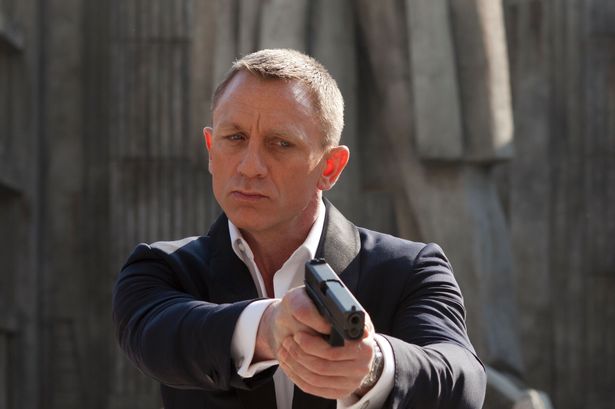
Perhaps the best James Bond movie of all time, Skyfall is proof that, in the hands of talented filmmakers, even absurd, over-the-top action movies can be considered art. Brilliant work all around from the cast, director Sam Mendes, and, most of all, cinematographer Roger Deakins.
But, then came Skyfall, a fantabulous piece of action filmmaking that manages not to just be a great Bond film, but a great film, period. It delves further into the 007 character than we've ever gone before, giving him a fully-fleshed back-story. And, it takes what started with Casino Royale -- instilling Bond with some amount of weakness and vulnerability -- and turns him into an actual character with layers hidden beneath the vodka martinis and promiscuity.
That's not to say they've turned Bond into a wuss. Craig isn't emo-Bond. He's still a badass. But, he's far more brooding, with hints of anger and loss that were never present in previous versions of the character. All I can say is that it works.
10. (Tie) Silver Linings Playbook
This is another movie that I didn't get around to reviewing fully on the blog. I wanted to...I just couldn't find the time.
On the one hand, this movie is kind of like Django Unchained. For a while, I thought I was watching the best movie of the year. However, in the end, it devolves into all too familiar rom-com territory. That's not necessarily a bad thing. But, this script and these characters deserved a more thoughtful ending.
Still, Silver Linings featured perhaps the best cast of any movie in 2012. And, from top to bottom, everyone was superb in their roles. Jennifer Lawrence appears to be headed for an Oscar for her turn as a widow battling depression. In a year not so stacked with great male leads, I'd say that Bradley Cooper would have a shot at Best Actor for his performance as the terrible-yet-somehow-likable jerk with bipolar disorder.
Ostensibly, this is a movie about people with mental illness. But, a movie that was just about depression and bipolar disorder wouldn't have been as uplifting and fun to watch.
9. Argo
As a director, Ben Affleck is for real, people. Get on board.
The success is in the execution. The script -- penned by Chris Terrio -- doesn't have an ounce of fat on it. Every scene, every character, and every line of dialogue is important to the story. The pacing is utterly flawless as the movie churns along as though it is being timed by a stopwatch. It is, like Affleck's other movies -- particularly The Town -- a remarkable display of filmmaking prowess and efficiency, yet another reason I compared him to Clint Eastwood.
Argo is currently the favorite to win Best Picture at the Oscars. Obviously, I don't think it's the best movie of the year. But, I'd be happy to see it win.
8. The Impossible
Easily the most emotional movie of the year -- I think I cried at least five separate times (I've got a kid, people) -- The Impossible is a perfect example of bad movie marketing. While the story about a family surviving the 2004 tsunami in Thailand is a more than a little intense, its incredibly accessible, with a happy ending and everything. If marketed for a wider audience, it seems to me that it would have been a sure-fire crowd-pleaser. And, given the subject matter and the fact that it's a true story, it's clearly Oscar bait.
But, for some reason, that's not the route they took. I'm not sure why.
Though only a few people saw this movie, it was enough to get Naomi Watts a nomination for Best Actress. Still, it could have done much more at the box office and with the awards crowd.
Go see this movie.
7. The Avengers
One of the more commonly repeated discussions among movie nerds this year was about whether The Dark Knight Rises was going to break the invisible barrier and be the first comic book movie to be nominated for Best Picture. It was a fun discussion...but people were talking about the wrong movie. While it doesn't have the artistic gravity of 2008's The Dark Knight, The Avengers is pretty much a perfect super hero movie.
Joss Whedon has solidified his position as King of the Geeks and I don't see him losing the title any time soon.
God Among Geeks Joss Whedon was brought on to write and direct The Avengers and he brings his other-worldly talent as a wordsmith fully to bear on this film. As in everything he does, he's able to draw you into an unfamiliar world and then surprise you by making fun of it. Virtually every scene is punctuated by perfectly timed joke or sight gag. Now, he's not lampooning or parodying super hero movies, not by any means. He's simply allowing the movie to have a sense of humor about itself. In the end, I that's what makes the whole thing work. I'm not kidding when I say that The Avengers should be up for a screenwriting Oscar.
Now, the biggest no-no in comic book and super hero movies is crowding the story with too many characters. Indeed, the quality of most super hero movies can be directly attributed to the number of villains. Yet, with The Avengers, we see six different heroes competing for screen time, yet it doesn't fall into any of the pitfalls of past movies.
For that, I have to give credit to the Marvel Universe idea. While Thor and Captain America weren't great movies, they did allow their heroes to come into The Avengers as fully developed characters. And, as the movie pipes along, you never get the sense that they're consciously trying evenly divide the story among the various heroes. Indeed, they all existed independently before The Avengers and, if box office returns are any indication, they'll have long lives afterward. It's a balancing act, to be sure, but Whedon pulls it off beautifully.
6. Cloud Atlas
Screw all pessimists. Yes, this movie wore its heart a little too much on its sleeve. And, sure, some of the attempts to hide actors in ridiculous roles didn't work. So the hell what.
Cloud Atlas is a feast for the senses and a wonderful movie-going experience. It worked for me. From the first scene where a mysteriously ragged Tom Hanks (see the image above) shows up on screen talking in an almost indecipherable dialect, I was hooked. And, for three hours, it didn't let me go.
The more I think about Cloud Atlas, the more I like it. But, as I said in my original review, I realize that it won't work for everyone:
Admittedly, there are times where the movie seems destined to devolve into an indecipherable mess. However, the film is very well edited and paced. For the most part, things move along at just the right speed and each element of each story is given the right amount of attention. For the most part.
In the end, it comes together efficiently, with each storyline getting an earned emotional payoff. Even if none of the stories worked -- which they do -- the technical prowess displayed in putting them together so well -- not to mention the incredible visuals that set each storyline apart -- would be worth the price of admission.
The filmmakers whose prowess is display are Lana and Andy Wachowski (the minds behind The Matrix) and Tom Tykwer (Run Lola Run), all three of whom have director credits. For the Wachowskis, this is easily their best work since the original Matrix movie. After a series of misfires, they are completely on top of their game with Cloud Atlas.
Ultimately, I understand why this movie hasn't worked for everyone. It may be too much, too over-the-top for some. Others may not like to have emotional themes spelled out for them. And, of course, some people just can't sit through three hours of any movie.
All I can say is that it worked for me. Indeed, Cloud Atlas will quite likely find its way into my top 10 list for 2012.
5. Lincoln
Steven Spielberg's opus about our 16th president is a wonderful film. That said, I honestly can't think of anything to say about it at the moment. How's that for lazy?
Mr. Spielberg, though undoubtedly one of the all-time greats, has a mixed record when it comes to historical movies and period pieces. And, in the lead up to Lincoln, many questioned what kind of movie it would be.
Would it be like Schindler's List or more like Amistad? Would be like Saving Private Ryan or War Horse?
In a refreshing turn of events, it wasn't like any of them. The movie, though emotional and moving, is free of the typical Spielbergian sentimentality. It relies less on plot and action and more on acting and dialogue. Indeed, it is easily the talkiest movie of Spielberg's entire career, and that's a good thing.
A very good thing.
4. Beasts of the Southern Wild
For a while, this was my favorite movie of the year. It's a powerful, emotional piece of work that is as much about the world it creates as it is the story. I was surprised to see it nominated for so many major Academy Awards -- Best Picture, Director, Actress, and Screenplay. But, each nomination is very deserving.
The first great success of this movie is the visceral depiction of life in the Bathtub. The audience is placed right in the middle of this community. You can almost smell the fish piled up at every dinner table and the dankness of the wet and rotting wood their homes are made of. While it's ostensibly unpleasant, the scenes that take place in the modern world are, by comparison, without color and without feeling. In the end, the Bathtub is clearly the place you want to be.
The second great success, as you might have expected from my extended prologue, is the depiction of the characters. Wallis is, quite simply, an amazing screen presence. Hushpuppy is a strong and willful character, but she lacks even a basic understanding of the world. Too many successful child actors are just adults in little bodies (see: Dakota Fanning...creepy). They can try to play children that are naive and ignorant, but there's always that feeling hanging over it all that it's just an act. There is no such conceit hanging over Wallis's performance. The youthful confidence coupled with the childlike naivete is just there on the screen, raw and unflinchingly real.
If anyone cared about my opinion, I'd volunteer to lead her Oscar campaign.
Henry's Wink is just as central to the story. While he is mostly one note -- a drunk with an apparent ax to grind -- the layers of his character are revealed slowly as his illness and eventual fate come into greater view. It's a great, heartbreaking performance.
It's not all that rare for me to cry during a movie -- I'm kind of a squish when you get right down to it. But, it is rare for me to cry during a movie, to weep a little on the way home, and to tear up when I think about the movie the next day. Yet, that's precisely what kind of movie Beasts of the Southern Wild is. It hits all the right emotional notes on the way to a resolution that is, at once, heart-rending and uplifting.
3. Looper
Easily the best sci-fi movie of the year. It starts out as just a run-of-the mill futuristic actioner. But, as it unfolds, it reveals a whole other side...a violent side that is equal parts brilliant and disturbing. It all leads up to a climax that features, in my opinion, the best cinematic moment of the year. It's a rare scene where the action, suspense, and emotional build-up reach the perfect payoff.
It won't mean much to you without seeing the whole movie, but, if you're interested, the scene I'm talking about begins at about 1:40 in this clip. Play it loud. Obviously, there are spoilers.
Okay, let's say you've watched the trailers and commercials for Looper. So, you're aware that it's a shoot-em-up actioner with an odd but interesting sci-fi premise. You know that it involves a group of hit-men assigned to kill targets transported back in time from a future wherein time travel has been invented. And, you know that the protagonist is assigned to kill his future self.
Sorry, you don't know anything about this movie. Not of the most interesting parts anyway.
There is a rich, detailed world created for this movie that's only hinted at in the trailers. There are twists and wrinkles to the story that aren't even alluded to in the commercials. Even if the movie wasn't very good -- and it is, believe me -- the studio could claim credit for outstanding marketing that managed to pull viewers in without giving everything away.
It's a triumph all-around.
2. The Master
Alright, I'm not sure whether this movie should this high on my list. It may not be that good. But, it may also be the best movie of the decade. This is a movie that needs more reflection, more time to grow in our cinematic consciousness. For me, it's a movie that I need to see at least one more time before I can be absolutely definitive.
What I will say is that, in 2012, no movie excited me and enthralled me like The Master. At the same time, no movie in 2012 frustrated and befuddled me like The Master. I don't think I've spent as much time thinking about a single movie. But, because I'm still not sure about it, I didn't have the heart to put it at the top of my list.
One thing is for certain, Paul Thomas Anderson is one of the best directors working today. The Master is either his best movie or his worst movie. Only time will tell which one.
Oh, and one more thing. With all apologies to Daniel Day-Lewis, Joaquin Phoenix deserves to win Best Actor this year. I'm still haunted by what he was able to do in this movie.
Ultimately, this is welcome entry into Paul Thomas Anderson's pantheon of greatness. With his last two movies -- this film and There Will Be Blood -- Anderson has entered Kubrickian territory. He reaches for profundity, borders on pretentiousness and tedium, but, in the end, he seems to knock it out of the park every single time. Whether The Master will stand up next to Anderson's other work over time remains to be seen. After one viewing, I'm pretty sure it belongs in the canon.
1. Zero Dark Thirty
Sadly, I didn't get around to writing a full review of Zero Dark Thirty. Only so many hours in a day.
Still, though it was difficult to come up with the rest of the movies on this list and put them in order, I knew from the beginning of this process that this would be my top choice. I knew from the moment the credits began to roll in the theater that this was my favorite movie of the year.
Zero Dark Thirty is, quite simply, as close to perfect as movies get.
From the opening moments when we hear the recorded phone calls from victims in the towers on 9/11 to the final moments of comfortless relief after the killing of Osama bin Laden, this movie takes hold of the audience and never lets go. It's a first-rate mystery, a brilliant political thriller, and, in the final act, an incredible action movie.
Jessica Chastain gives a raw, slow-burn performance as the Maya, the CIA agent that eventually chased down the leads that led to death of America's top enemy. Her portrayal perfectly encapsulates the moral confusion that surrounds the War on Terror. Though her conviction and commitment are not ever questioned, she shudders when watching a brutal interrogation. And, in the end, it's not clear that achieving her goal will bring her any peace.
The biggest travesty of the Oscar season is Kathryn Bigelow's snub for Best Director. As with The Hurt Locker, she does a masterful job at building suspense. But, with Zero Dark Thirty, she does most of it without the threat of an imminent explosion. The movie gives a big eff-you to Hollywood conventions. It's not about patriotism, it's about the truth, laying out the facts and letting the audience be the judge.
I won't delve too much into the controversy has surrounded this movie, I'll just say that anyone who claims that the film is pro-torture didn't watch it very closely.
Zero Dark Thirty is, without a doubt in my mind, the best movie of 2012.
So, there you have it people. Just to recap, here is the list from top to bottom:
1. Zero Dark Thirty
2. The Master
3. Looper
4. Beasts of the Southern Wild
5. Lincoln
6. Cloud Atlas
7. The Avengers
8. The Impossible
9. Argo
10. (tie) Skyfall and Silver Linings Playbook